
Building better habits does not have to mean completely changing your life overnight. In fact, some of the most meaningful changes come from simply paying attention to what you are already doing.
That is where habit tracking can help.
Tracking a habit gives you a visual reminder of your progress and helps you notice patterns you might otherwise miss. You may discover that you drink more water on workdays, sleep better when you stay off your phone at night, or feel more productive when you plan your day the evening before.
You also do not need to track everything at once.
Choose a handful of habits that support the areas of your life you want to improve this month. Your habit tracker should help you feel more aware and intentional—not overwhelmed.
Here are 25 habits worth tracking this month.
1. Drinking Enough Water
Staying hydrated is one of the simplest wellness habits to track.
Instead of trying to remember how much water you drank at the end of the day, record each glass or bottle as you go.
You could track:
- Number of glasses
- Number of ounces
- Whether you reached your daily goal
Over time, you may begin to notice when you are most likely to forget to drink water.
2. Getting Enough Sleep
Sleep affects your energy, mood, concentration, and productivity.
Track how many hours you sleep each night and consider adding a quick rating for how rested you feel the next morning.
This can help you identify the bedtime routines that work best for you.
3. Going to Bed on Time
Tracking sleep and tracking bedtime are not necessarily the same thing.
If you often stay up later than you intended, create a habit around getting into bed by a certain time.
A simple checkmark each night may be enough to encourage you to start winding down earlier.
4. Waking Up on Time
If mornings tend to feel rushed, track whether you wake up at your planned time.
You do not necessarily need to become a 5 a.m. person.
The goal is simply to create a morning schedule that works for your lifestyle.
5. Making Your Bed
Making your bed takes only a few minutes, but it can help your bedroom feel calmer and more organized.
It is also an easy habit to complete first thing in the morning, giving you an early win for the day.
6. Moving Your Body
You do not have to complete a long workout every day to track movement.
Walking, stretching, gardening, cleaning, yoga, strength training, and other activities all count.
Track the type of movement, the number of minutes, or simply whether you moved intentionally that day.
7. Taking a Daily Walk
Walking is an easy habit to incorporate into many routines.
You might track:
- A 10-minute walk
- A lunchtime walk
- Steps taken
- Distance walked
Setting a realistic goal makes it much easier to stay consistent.
8. Eating Breakfast
If you regularly skip breakfast and find yourself hungry or low on energy later, consider tracking how often you eat something in the morning.
You can also use your tracker to experiment with different breakfasts and notice which ones keep you satisfied the longest.
9. Eating Fruits and Vegetables
Instead of trying to overhaul your entire diet, focus on adding nutritious foods.
Track how many servings of fruits or vegetables you eat each day or simply mark whether you included them in your meals.
Small additions can gradually become part of your normal routine.
10. Taking Vitamins or Supplements
If vitamins or supplements are already part of your routine, a tracker can help you remember them.
Keep your tracker near the location where you normally take them so marking the habit becomes part of the routine.
11. Reading
Reading is a great habit to track because even a few minutes each day can add up.
You could track:
- Minutes read
- Pages read
- Chapters completed
- Days you read
A goal of 10 or 15 minutes may feel much more manageable than trying to finish a certain number of books each month.
12. Journaling
Journaling does not have to involve filling several pages.
Some days you might write a paragraph. Other days you may write a single sentence.
Track whether you spent a few minutes checking in with yourself, recording memories, brainstorming ideas, or reflecting on your day.
13. Practicing Gratitude
A gratitude habit can be incredibly simple.
Write down one thing you appreciated each day.
It could be something significant or something as small as a good cup of coffee, pleasant weather, or an unexpectedly productive afternoon.
14. Planning Tomorrow
Spend a few minutes each evening looking ahead to the next day.
Write down your appointments, priorities, errands, or important tasks.
Tracking this habit can help you build a consistent evening planning routine and reduce that “What am I forgetting?” feeling in the morning.
15. Choosing Your Top Three Priorities
Long to-do lists can become overwhelming quickly.
Instead, choose the three things that matter most each day.
Track whether you identified your priorities before getting pulled into smaller tasks.
This habit can help you become more intentional with your time.
16. Completing a Daily Reset
A daily reset is a short routine that helps put your home or workspace back in order.
Your reset might include:
- Clearing counters
- Putting away clutter
- Loading the dishwasher
- Straightening pillows
- Preparing your workspace for tomorrow
Even 10 minutes can make the next day feel easier.
17. Spending 10 Minutes Decluttering
Decluttering does not have to involve an entire weekend of organizing.
Try setting a timer for 10 minutes.
Choose one drawer, shelf, basket, countertop, or small area and work until the timer ends.
Track your sessions throughout the month and you may be surprised by how much you accomplish.
18. Checking Your Budget
You do not necessarily need to review your entire financial situation every day.
A quick budget check might mean logging purchases, checking account balances, or updating your spending tracker.
Regular check-ins can prevent small expenses from disappearing unnoticed.
19. Having a No-Spend Day
A no-spend day simply means intentionally avoiding unnecessary purchases for the day.
You can still pay bills or purchase genuine necessities.
Tracking no-spend days can help you become more aware of impulse purchases and spending habits.
20. Working Toward a Savings Goal
If you are saving for something specific, track each contribution.
Your savings goal might be:
- An emergency fund
- A vacation
- Holiday expenses
- A new computer
- Home improvements
- Paying off debt
Watching your progress grow can be extremely motivating.
21. Limiting Social Media
If you frequently open social media without realizing how much time has passed, consider creating a limit.
Track whether you stayed within your chosen amount of screen time.
You could also experiment with habits such as no social media before breakfast or no scrolling after a certain hour.
22. Having Phone-Free Time
Set aside a specific portion of the day when your phone stays out of reach.
This might be during:
- Dinner
- Your morning routine
- Reading time
- Family time
- The hour before bed
Tracking phone-free time can help you become more intentional about how you use technology.
23. Spending Time on a Hobby
Hobbies are often pushed aside when life becomes busy.
Track whether you spend time doing something simply because you enjoy it.
You might sew, paint, garden, bake, write, crochet, scrapbook, play music, or work on another creative project.
Even 15 minutes counts.
24. Working Toward a Personal Goal
Choose one goal you want to make progress on this month.
Then identify the small action you can repeat regularly.
For example, instead of tracking “write a book,” track “write for 20 minutes.”
Instead of tracking “organize the house,” track “declutter one area.”
Tracking the action rather than the outcome makes large goals feel much more manageable.
25. Taking Time to Rest
Rest deserves a place on your tracker too.
Not every habit needs to be about productivity.
You might track whether you:
- Took a break without multitasking
- Spent time outside
- Watched a favorite show
- Read for fun
- Took a relaxing bath
- Enjoyed a quiet evening
- Went to bed early
Rest is not wasted time. It helps make everything else more sustainable.
How Many Habits Should You Track?
Seeing a list of 25 habits does not mean you should immediately start tracking all 25.
Trying to change too many things at once can make habit tracking feel like another job.
Instead, choose three to seven habits that match your current priorities.
For example, if you are focusing on your finances, you might track:
- Budget check-ins
- No-spend days
- Savings contributions
If you want calmer evenings, you might track:
- Daily resets
- Planning tomorrow
- Phone-free time
- Bedtime
If you are focusing on wellness, you might track:
- Water
- Sleep
- Walking
- Fruits and vegetables
Your habits can change from month to month.
Make Your Habit Tracker Work for You
There is no perfect habit tracker.
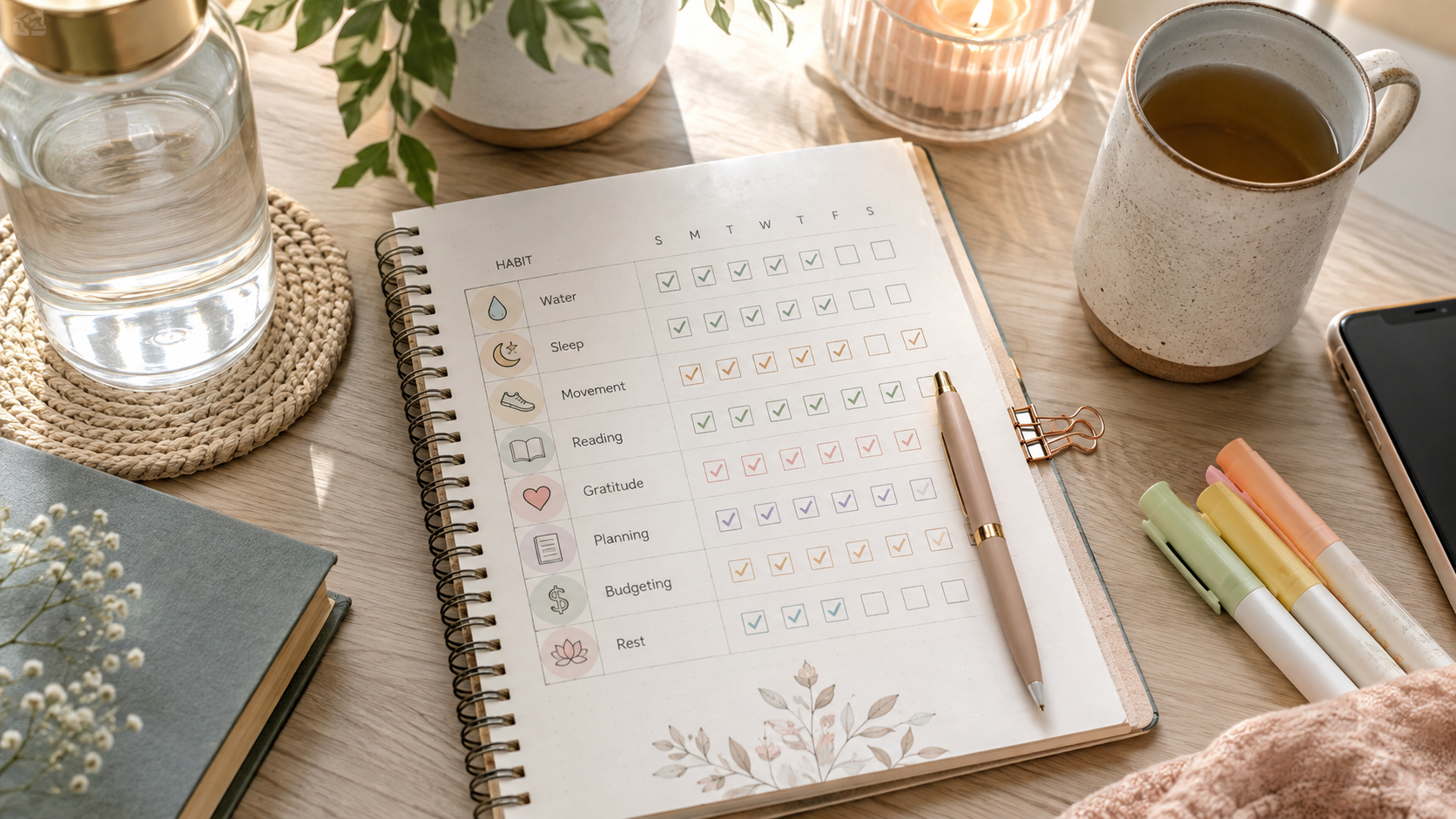
Some people enjoy detailed spreadsheets. Others prefer a printable tracker filled with checkmarks or colored boxes.
The best system is the one you will actually use.
Keep your tracker somewhere visible and make updating it easy. You might fill it in while planning your day, drinking your morning coffee, or completing your evening routine.
Most importantly, do not treat a missed day as failure.
Habit trackers are tools for awareness, not perfection.
A row filled with a few blank spaces still represents progress.
Start Small This Month
Choose a few habits from this list that would make your days feel a little easier, healthier, calmer, or more intentional.
Track them for the next month and pay attention to what you discover.
You may find that the biggest benefit of habit tracking is not creating a perfect streak.
It is learning more about yourself.
And once you can see your patterns clearly, it becomes much easier to decide which ones you want to keep—and which ones you are ready to change.
Subscribe to our newsletter and receive a free 7 day reset planner.