
**This article contains affiliate links. By clicking on a link on this page, I may receive compensation at no cost to you.
If you’re trying to get better control of your money, a budget binder can be one of the simplest tools to help you get organized. You don’t need complicated spreadsheets, dozens of categories, or a perfect financial plan to begin. You simply need a system that lets you see where your money is going and make intentional decisions about what happens next.
A budget binder keeps your financial information in one place so you can track spending, plan bills, work toward savings goals, and monitor your progress.
If you’ve never used one before, here are the budget binder essentials every beginner should include.
What Is a Budget Binder?
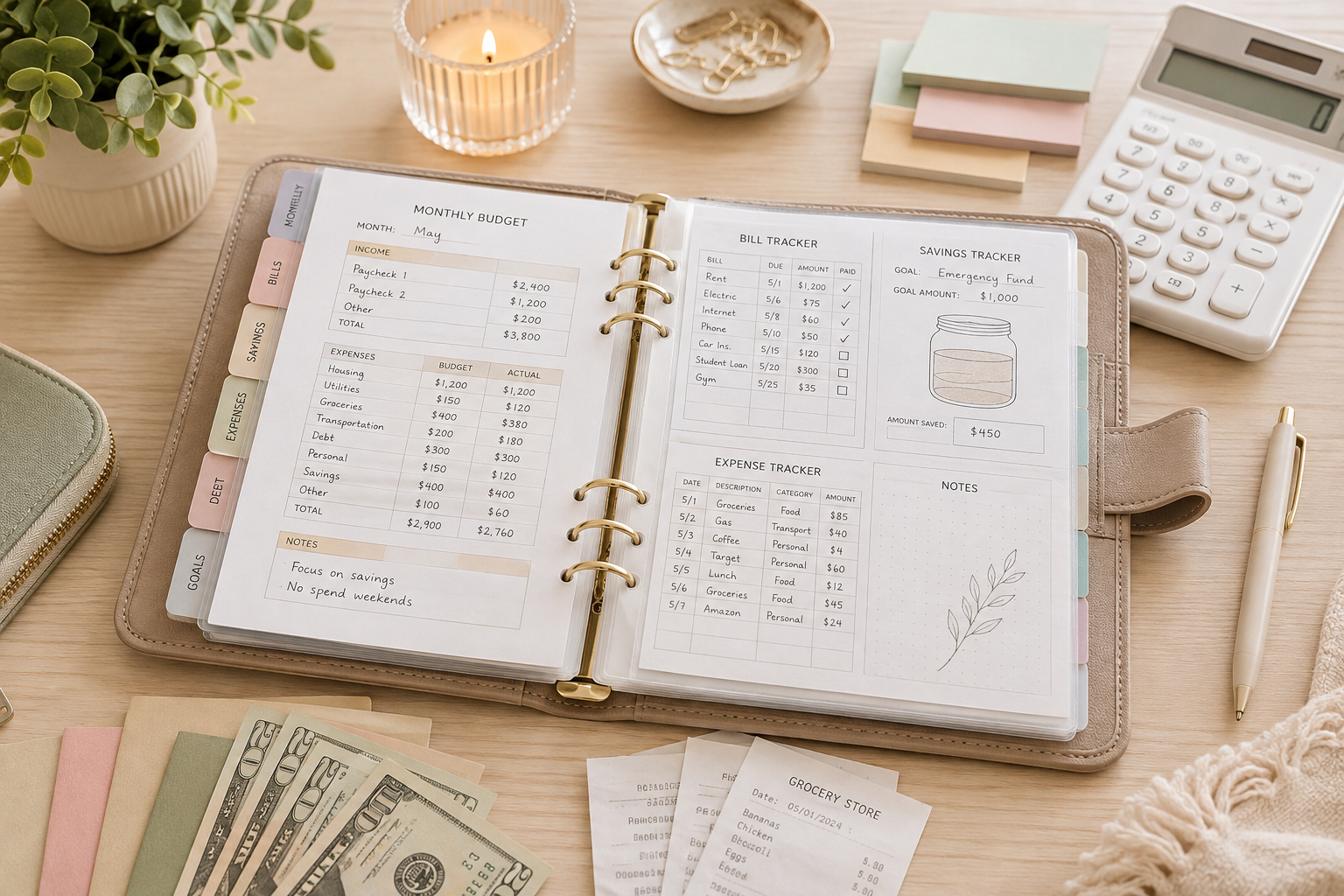
A budget binder is a physical or printable system used to organize your household finances. Think of it as a home base for your money.
Instead of trying to remember when bills are due or wondering how much you spent at the grocery store last week, you can keep everything organized in one convenient place.
Depending on your needs, your budget binder might include:
- Monthly budgets
- Bill trackers
- Expense logs
- Savings trackers
- Debt payoff pages
- Financial goals
- Sinking fund trackers
- Notes and important financial information
The best part is that your budget binder can be as simple or detailed as you want it to be.
1. A Monthly Budget Worksheet
Your monthly budget should be one of the first pages in your binder.
This page gives you an overview of the money coming in and the money going out each month.
Start by listing all sources of income, including:
- Paychecks
- Side hustle income
- Freelance income
- Child support
- Benefits
- Other regular income
Next, list your expected expenses.
Common categories include:
- Housing
- Utilities
- Groceries
- Transportation
- Insurance
- Debt payments
- Subscriptions
- Personal spending
- Savings
Your goal isn’t necessarily to create a perfect budget. It’s to give every dollar a purpose before you spend it.
If your income varies from month to month, consider budgeting based on your lowest expected monthly income. Any additional income can then be directed toward savings, debt repayment, or other financial goals.
2. A Bill Payment Tracker
Missing a bill can quickly lead to late fees, penalties, and unnecessary stress.
A bill payment tracker helps you keep track of exactly what needs to be paid and when.
Include columns for:
- Bill name
- Due date
- Amount due
- Payment method
- Date paid
- Confirmation number, if needed
Checking off bills as you pay them can also give you a quick visual picture of where you stand for the month.
If you have bills that are automatically drafted, include those too. Automatic payments are easy to forget when you’re looking at your available bank balance.
3. A Monthly Expense Tracker
Creating a budget is only half of the process.
You also need to know what you actually spent.
An expense tracker allows you to record your purchases throughout the month.
You might track:
| Date | Expense | Category | Amount |
|---|---|---|---|
| Aug. 2 | Grocery Store | Groceries | $84.35 |
| Aug. 4 | Gas Station | Transportation | $42.00 |
| Aug. 5 | Coffee Shop | Dining | $6.75 |
After a few weeks, patterns often become obvious.
You may discover that restaurant spending is higher than expected or that several small subscription charges are adding up.
Tracking doesn’t mean you can never spend money on fun things. It simply helps you make those decisions with better information.
4. A Savings Tracker
Saving money feels much more motivating when you can actually see your progress.
Add a savings tracker for each major goal you’re working toward.
For example:
Emergency Fund Goal: $2,000
Current Savings: $750
Remaining: $1,250
You might create trackers for:
- Emergency savings
- Vacation
- Christmas
- Home repairs
- Car repairs
- New appliances
- School expenses
- Moving expenses
Coloring in a savings chart or watching the total increase each month can make long-term goals feel much more achievable.
5. A Debt Payoff Tracker
If you’re paying off debt, give it a dedicated section in your budget binder.
List each debt along with:
- Current balance
- Interest rate
- Minimum payment
- Extra payment
- New balance
You can also use a visual debt payoff chart to track your progress.
Whether you use the debt snowball method, which focuses on paying the smallest balance first, or the debt avalanche method, which focuses on the highest interest rate first, having your balances written down helps you stay focused.
Don’t forget to celebrate milestones along the way.
Paying off the first $500 or dropping a balance below $5,000 is still progress.
6. Sinking Fund Trackers
Sinking funds are one of the most useful budgeting tools for expenses that don’t happen every month.
Instead of waiting until a large expense arrives, you save a little bit at a time.
For example, if you expect Christmas to cost $600 and you start saving six months beforehand, you could save:
$600 ÷ 6 months = $100 per month
Possible sinking fund categories include:
- Christmas
- Birthdays
- Car maintenance
- Annual insurance
- Back-to-school shopping
- Home repairs
- Pet expenses
- Medical expenses
- Vacations
Sinking funds can turn financial surprises into planned expenses.
7. A Financial Goals Page
Your budget should help you accomplish something.
Add a financial goals page near the beginning of your binder and write down what you’re working toward.
Your goals might include:
- Save $1,000 for emergencies.
- Pay off a credit card.
- Save for a vacation.
- Build a three-month emergency fund.
- Stop relying on credit cards between paychecks.
- Save for a down payment.
- Increase retirement contributions.
Try breaking big financial goals into smaller milestones.
Instead of writing:
Save $10,000
you might create smaller goals:
- Save the first $500.
- Reach $1,000.
- Reach $2,500.
- Reach $5,000.
- Reach $7,500.
- Reach $10,000.
Smaller milestones make progress much easier to see.
8. A Subscription Tracker
Subscriptions have a way of quietly multiplying.
Streaming services, apps, software, memberships, and subscription boxes can easily become recurring expenses you barely notice.
Create a page listing:
- Subscription name
- Monthly or annual cost
- Renewal date
- Payment method
- Keep or cancel
Review this list every few months.
You may find services you’re no longer using that can be canceled immediately.
9. A No-Spend Tracker
A no-spend challenge can be helpful when you want to reset your spending habits.
This doesn’t mean spending absolutely nothing.
Bills, groceries, transportation, and other necessities still need to be paid.
Instead, you choose certain categories to avoid temporarily, such as:
- Takeout
- Clothing
- Craft supplies
- Coffee shops
- Online shopping
Add a calendar to your binder and mark each day that you successfully complete your challenge.
Even a short seven-day or fourteen-day challenge can reveal spending habits you hadn’t noticed before.
10. A Monthly Budget Review
One of the most important pages in your binder may actually be the one you complete after the month ends.
Ask yourself:
What went well this month?
Maybe you stayed within your grocery budget or added extra money to savings.
Where did I overspend?
Don’t judge yourself. Look for patterns.
Were there expenses I forgot to budget for?
Add them to next month’s plan.
What can I change next month?
Perhaps your grocery budget needs to increase while your entertainment budget decreases.
Your budget should evolve as your life changes.
Physical Supplies for Your Budget Binder
If you’re creating a printed binder, you don’t need many supplies.
A basic setup could include:
- A 1-inch or 1½-inch binder
- Printable budgeting pages
- Binder dividers
- Page protectors
- Pens or pencils
- Highlighters
- Sticky notes
You can also add zipper pouches or envelopes if you use a cash budgeting system.
Don’t feel like you need an elaborate aesthetic setup before you start. A simple binder that you actually use is much more valuable than a beautiful one that sits untouched on a shelf.
How to Organize Your Budget Binder
Dividers can make your binder much easier to use.
A beginner-friendly setup might look like this:
Section 1: Financial Goals
Keep your yearly goals and financial priorities here.
Section 2: Monthly Budget
Add your monthly budget sheets and income planning pages.
Section 3: Bills
Keep bill trackers and recurring payment information together.
Section 4: Expenses
Use this section for spending logs and expense trackers.
Section 5: Savings
Store savings challenges, emergency fund trackers, and sinking fund pages here.
Section 6: Debt
Keep debt balances and payoff trackers together.
Section 7: Monthly Reviews
Save completed monthly reviews so you can look back at your progress.
Over time, your binder becomes more than a budgeting tool. It becomes a record of how far you’ve come.
How Often Should You Update Your Budget Binder?
You don’t need to work on your budget every day.
Try developing a simple routine.
Once a week:
Spend about 10–15 minutes recording expenses, checking your account balances, and reviewing upcoming bills.
Once a month:
Create your new monthly budget, update savings and debt balances, and complete your monthly review.
Consistency is far more important than spending hours working on your budget.
Don’t Try to Track Everything at Once
One of the biggest mistakes beginners make is trying to build an incredibly detailed budgeting system immediately.
You don’t need 30 trackers to begin.
Start with four pages:
- Monthly budget
- Bill tracker
- Expense tracker
- Savings or debt tracker
Use those pages for a month.
Once you know what you actually need, add additional sections.
Your budget binder should make managing your money easier—not give you another complicated system to maintain.
Give Yourself Room to Adjust
Your first budget probably won’t work perfectly.
Your grocery estimate may be too low.
You might forget an annual subscription.
Your electric bill might be higher than expected.
That’s normal.
Budgeting is less about predicting every dollar perfectly and more about learning how your money works.
Each month gives you better information for the next one.
Final Thoughts
Creating a budget binder doesn’t require expensive supplies or complicated financial knowledge. It simply gives you one organized place to plan, track, and review your money.
Start with the essentials:
- A monthly budget
- A bill tracker
- An expense tracker
- A savings tracker
- A debt payoff tracker
- Sinking funds
- Financial goals
- A monthly review
Then customize your binder as your needs change.
The goal isn’t to create a picture-perfect budget. The goal is to create a system you can return to month after month—one that helps you understand your money, make thoughtful decisions, and keep moving toward the financial goals that matter most to you.
A simple budget binder may not change your finances overnight, but used consistently, it can help you feel much more organized and confident about where your money is going.
Subscribe to our newsletter and receive a free 7 day reset planner.