
Busy women often carry a lot: work, family, appointments, errands, meals, finances, home responsibilities, and everyone else’s needs. With so much happening every day, personal health can easily become something you only think about when you are already exhausted, stressed, or not feeling your best.
That is where simple health trackers can help.
A health tracker does not have to be complicated. You do not need a giant binder, a color-coded system, or an app full of notifications. In fact, the best health trackers for busy women are usually the simplest ones. They help you notice patterns, stay consistent, and make small choices that support your well-being.
Below are simple health trackers that can fit into a busy lifestyle without adding more stress to your day.
Why Health Trackers Work
Health trackers are helpful because they make your habits visible. When life is busy, it is easy to think, “I’m doing okay,” even when you are skipping water, sleeping poorly, missing meals, or running on stress.
Writing things down helps you see what is actually happening.
A simple tracker can help you:
- Notice patterns in your energy, mood, sleep, and habits
- Stay consistent with small daily goals
- Remember appointments, medications, or supplements
- Feel more in control of your routine
- Celebrate progress instead of focusing only on what you missed
The goal is not perfection. The goal is awareness.
1. Daily Water Tracker
A water tracker is one of the easiest health trackers to start with. Many busy women forget to drink enough water throughout the day, especially when they are working, taking care of kids, running errands, or drinking more coffee than water.
A simple water tracker can include checkboxes for each glass or bottle of water you drink.
You might track:
- Number of glasses of water
- Number of water bottles finished
- Time of day you drank water
- Whether you added electrolytes, lemon, or flavoring
A printable water tracker works well because you can place it somewhere visible, such as on your desk, refrigerator, planner, or bathroom mirror.
Simple goal: Start by tracking water for one week. Do not worry about changing everything at once. Just notice your usual intake.
2. Sleep Tracker
Sleep affects nearly everything: mood, energy, focus, cravings, patience, and productivity. Yet it is often one of the first things busy women sacrifice.
A sleep tracker can help you see whether your sleep patterns are supporting you or leaving you drained.
You can track:
- Bedtime
- Wake-up time
- Total hours slept
- Sleep quality
- Night wakings
- Caffeine intake
- Screen time before bed
You may start to notice patterns. For example, you may sleep worse after late caffeine, scrolling before bed, heavy evening meals, or stressful days.
A sleep tracker is especially helpful if you often say, “I’m tired all the time,” but are not sure why.
3. Mood Tracker
A mood tracker helps you check in with yourself emotionally. This is especially useful for women who are constantly taking care of others and rarely pause to ask, “How am I actually feeling?”
A simple mood tracker can be as easy as circling one word per day.
Mood options might include:
- Happy
- Calm
- Tired
- Stressed
- Overwhelmed
- Irritable
- Sad
- Motivated
- Anxious
- Peaceful
You can also use colors, smiley faces, numbers, or a simple 1–5 scale.
Over time, a mood tracker can help you connect your emotions to sleep, stress, food, hormones, work demands, or your schedule.
The point is not to judge your feelings. It is to notice them.
4. Meal Tracker
A meal tracker does not have to mean counting calories or following a strict diet. For many busy women, a meal tracker is simply a way to notice whether you are eating regularly and choosing foods that help you feel good.
You can track:
- Breakfast, lunch, dinner, and snacks
- Fruits and vegetables
- Protein
- Meals eaten at home
- Meals eaten out
- Energy after meals
- Foods that upset your stomach
- Foods that keep you full
This can be especially useful if you often skip meals, rely on convenience foods, or feel low energy in the afternoon.
A meal tracker can also make grocery shopping and meal planning easier because you begin to notice what you actually eat during a busy week.
5. Movement Tracker
Movement does not have to mean intense workouts. A movement tracker can include anything that gets your body moving.
You might track:
- Walks
- Stretching
- Strength training
- Yoga
- Steps
- Cleaning
- Dancing
- Yard work
- Short workout videos
For busy women, a movement tracker can be encouraging because it shows that small movement still counts.
You do not need an hour at the gym to make progress. Ten minutes of stretching, a walk around the block, or a quick strength routine can still be worth tracking.
Simple goal: Track movement for 30 days and focus on consistency, not intensity.
6. Medication and Supplement Tracker
If you take daily medications, vitamins, or supplements, a tracker can be very helpful. Busy mornings can make it easy to forget whether you already took something.
A medication or supplement tracker can include:
- Name of medication or supplement
- Dosage
- Morning, afternoon, or evening checkboxes
- Refill reminders
- Notes for side effects or questions for your provider
This type of tracker is simple but practical. It can also help you prepare for doctor visits because you have a record of what you took and when.
Always follow your healthcare provider’s instructions for medications and supplements.
7. Symptom Tracker
A symptom tracker can help you notice patterns in your body. This can be useful for headaches, digestive issues, fatigue, allergies, cramps, joint pain, or other recurring symptoms.
You can track:
- Date and time
- Symptom
- Severity
- Possible triggers
- Food, sleep, stress, or cycle notes
- What helped
- Questions for your doctor
A symptom tracker is not meant to diagnose anything. It is a tool to help you organize information and explain patterns more clearly if you need to talk with a healthcare professional.
8. Cycle Tracker
For women who menstruate, a cycle tracker can be a helpful part of overall wellness tracking. Your cycle may affect energy, mood, cravings, sleep, headaches, motivation, and productivity.
You can track:
- Period start and end dates
- Flow level
- Cramps
- Mood
- Energy
- Headaches
- Cravings
- Skin changes
- Sleep changes
This can help you plan ahead. For example, you may notice that certain weeks are better for high-energy tasks while others are better for rest, lighter routines, or simpler meals.
9. Stress Tracker
Stress can build quietly, especially when your schedule is full. A stress tracker can help you notice when your stress level is rising before you completely burn out.
You can track:
- Stress level from 1–5
- Main source of stress
- Physical signs of stress
- What helped you calm down
- Boundaries you need to set
- Tasks you can simplify
A stress tracker can also include a small daily reflection question, such as:
- What felt heavy today?
- What can I let go of?
- What is one thing I did well?
- What do I need tomorrow?
Sometimes simply writing down your stress helps you see what needs attention.
10. Self-Care Tracker
Self-care does not have to be expensive, time-consuming, or fancy. For busy women, self-care often means making sure your basic needs are not ignored.
A self-care tracker can include small habits like:
- Drinking water
- Taking a walk
- Reading
- Stretching
- Taking a quiet break
- Going to bed on time
- Journaling
- Calling a friend
- Saying no
- Spending time outside
This kind of tracker is a reminder that you matter, too.
You can make it very simple by choosing three self-care habits for the week and checking them off when you complete them.
How to Start Without Getting Overwhelmed
The biggest mistake people make with health trackers is trying to track too much at once.
If you are already busy, do not start with ten trackers. Start with one.
Choose the area that would make the biggest difference in how you feel right now.
Ask yourself:
- Am I always tired?
- Am I forgetting water?
- Am I skipping meals?
- Am I feeling stressed or overwhelmed?
- Do I need to move more?
- Do I need to track symptoms for a doctor visit?
Pick one simple tracker and use it for one week. Once it becomes part of your routine, you can add another.
Simple Health Tracker Ideas to Combine
If you want one simple daily wellness page, you can combine a few basic trackers into one sheet.
A daily health tracker could include:
- Water intake
- Sleep hours
- Mood
- Movement
- Meals
- Medication or supplements
- One note about how you felt
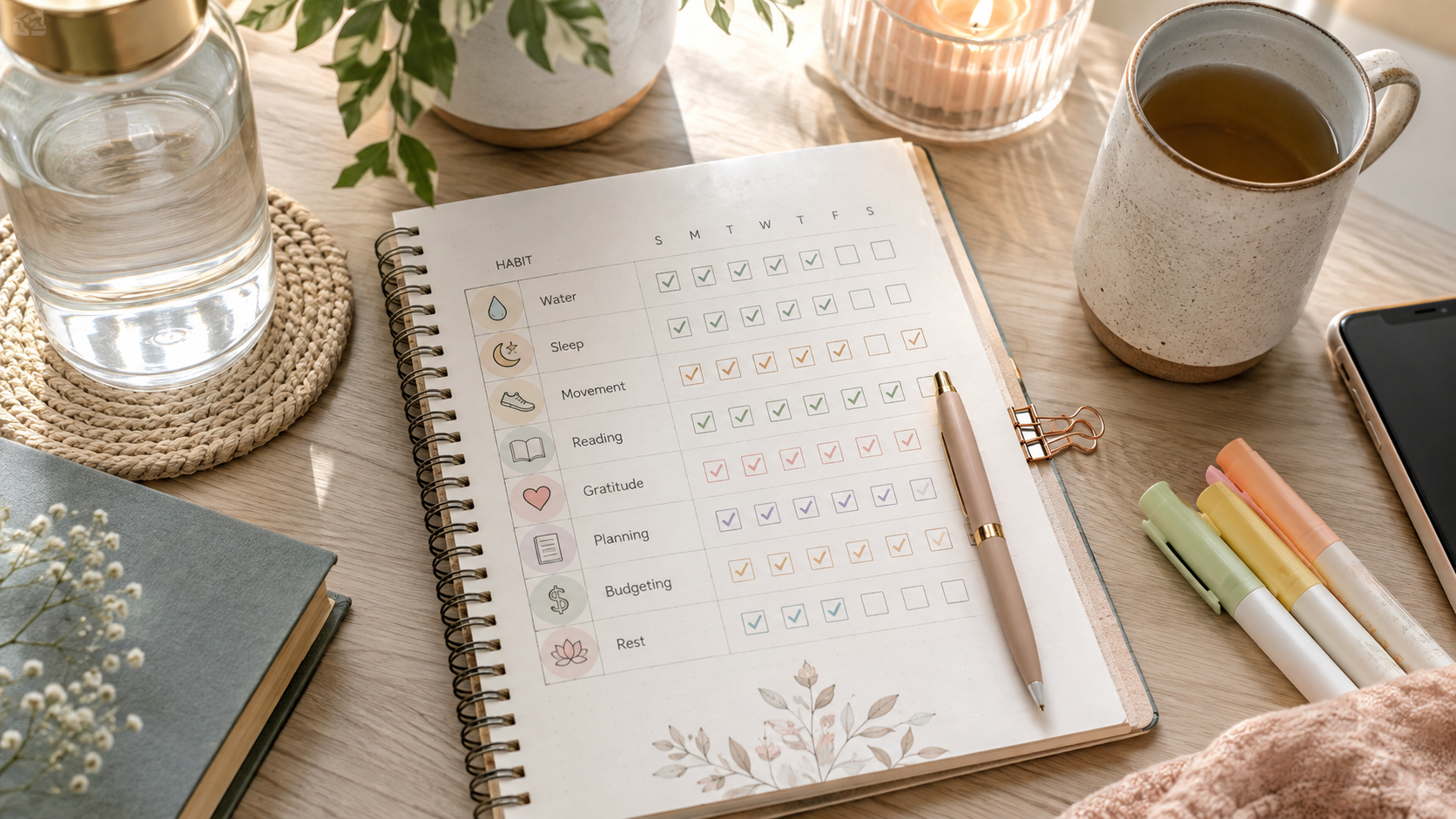
A weekly health tracker could include:
- Daily habit checkboxes
- Weekly mood overview
- Exercise or movement log
- Meal planning section
- Notes for patterns or changes
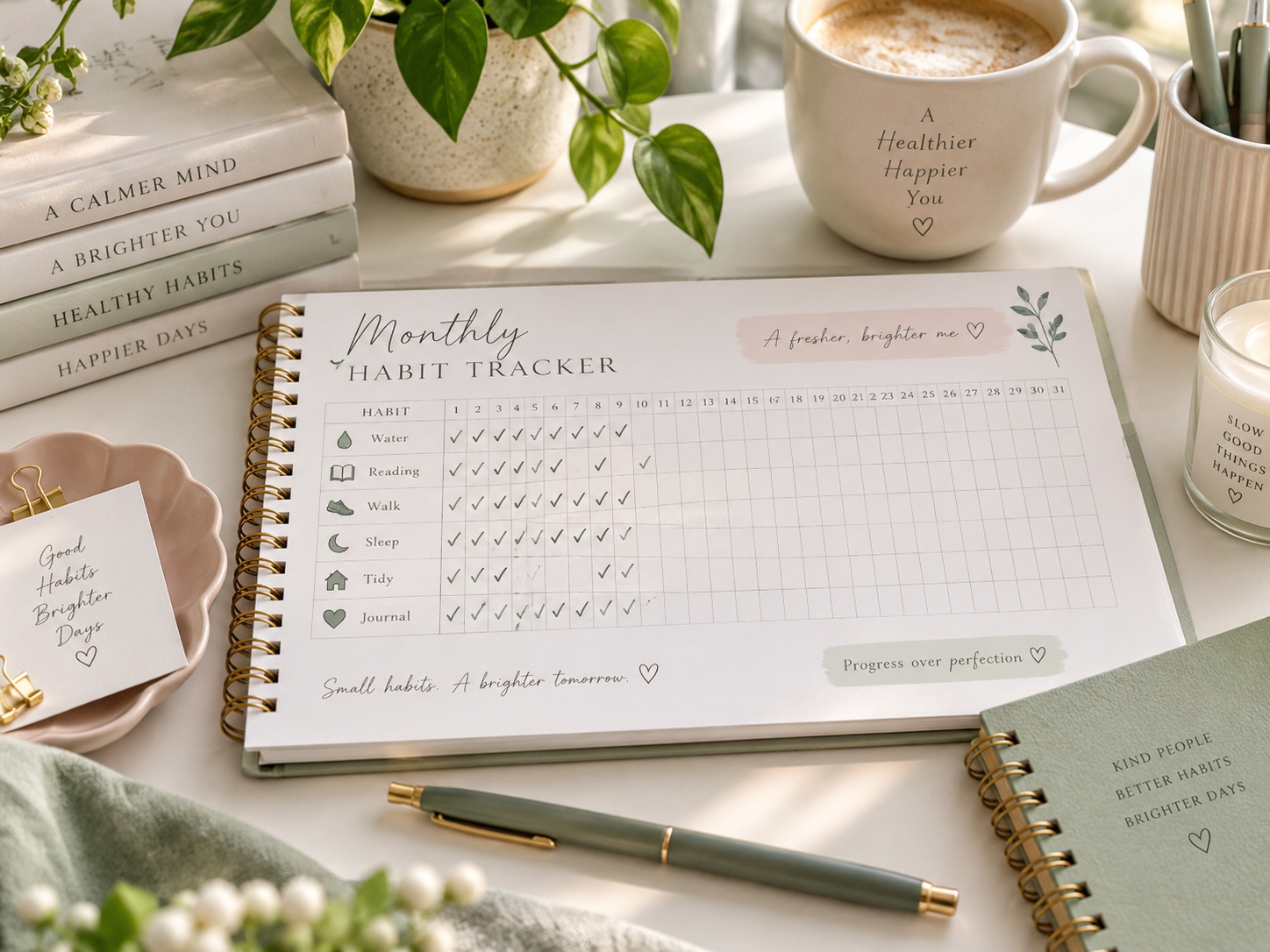
A monthly health tracker could include:
- Cycle tracking
- Symptom tracking
- Appointment reminders
- Goal progress
- Monthly reflection
The best tracker is the one you will actually use.
Tips for Making Health Tracking Easier
To make health tracking feel simple instead of overwhelming, keep your system realistic.
Try these tips:
- Keep your tracker somewhere visible
- Use checkboxes instead of long writing sections
- Track only what matters to you
- Use one page per day or week
- Do not worry about blank spaces
- Review your tracker once a week
- Celebrate small improvements
A tracker should support your life, not make you feel behind.
Final Thoughts
Simple health trackers can help busy women take better care of themselves without creating another complicated task. Whether you start with water, sleep, mood, movement, meals, or stress, the key is to keep it simple.
You do not have to change everything overnight.
Start with one small habit. Track it honestly. Look for patterns. Then make tiny adjustments that help you feel better.
Your health does not have to be perfect to be worth paying attention to. A simple tracker can be a gentle reminder that your needs matter, even in the middle of a busy life.
Subscribe to our newsletter and receive a free 7 day reset planner.